
Understanding Electrotherapy
Physiotherapists use many tools to treat pain, improve range of motion, and optimize musculoskeletal conditions. In addition to treatment techniques such as joint mobilization, soft tissue release, exercise prescription, education, muscle energy techniques, passive stretching, and more, your Physiotherapist may recommend electrotherapy as a treatment option as well.
Using specialized electrotherapy modalities designed to deliver customized levels of electrical stimulation to your body’s muscles, joints, nerves etc., skilled Physiotherapists can utilize the efficacy of electrotherapy to treat injuries, promote healing, and provide pain relief.
Electrotherapy: What it is & How it Works
A valuable tool used by many Physiotherapists is electrotherapy. It treats chronic pain, musculoskeletal injuries, muscle atrophy, and nerve pain by using targeted and controlled electrical stimulation.
Electrotherapy is non-invasive modality that stimulates nerves and muscles through the skin’s surface. Though it varies based on which device your practitioner uses, electrotherapy is thought to work in a variety of ways:
- Interfere or block the body’s pain signals, reducing pain
- Release endorphins (natural pain relievers).
- Stimulate muscle tissue to contract to reduce atrophy, and improve muscle growth.
- Create a heating effect within the body, which improves circulation and stimulates healing, and reduces stiffness in muscles & joints.
- Stimulate cells which reduce inflammation, promote collagen production, and inhibit pain.
6 Main Types of Electrotherapy Treatment
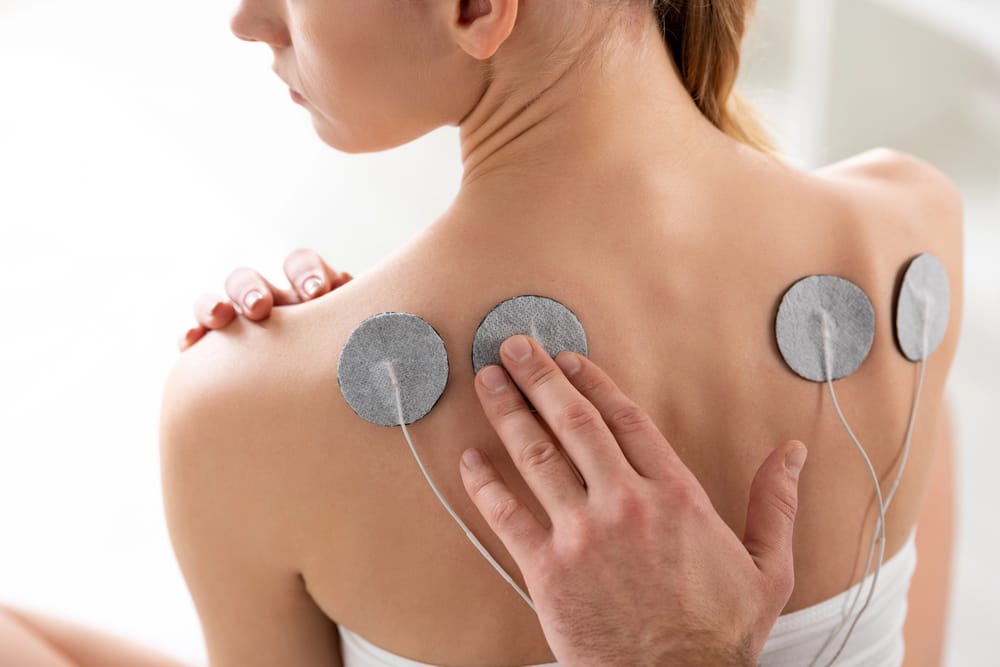
The setup is similar for most of the electrotherapy machines. Generally, carbon electrode pads are placed on your skin and taped in place. The electrodes are connected via wire to the Physiotherapist’s battery-powered device, which then transmits the electrical signals to the desired area of the body.
In other forms of electrotherapy, your Physiotherapist will use a transmitting wand with ultrasound gel to relay specialized ultrasound waves into your body.
Types of Electrotherapy:
- Transcutaneous Electrical Nerve Stimulation (TENS)
- Therapeutic Ultrasound
- Interferential Current (IFC)
- Electroacupuncture
- Shockwave Therapy
- Electrical Muscle Stimulation (EMS)
Transcutaneous Electrical Nerve Stimulation ( TENS)
One of the most common electrotherapy treatments, Transcutaneous Electrical Nerve Stimulation (TENS), uses a small specialized device to transmit pulses of electrical stimulation. The goal of the TENS machine is to stimulate sensory nerves to achieve pain relief, and it is often used for both nerve pain and chronic pain conditions. It works by distracting your nervous system from the pain.
Therapeutic Ultrasound
Therapeutic ultrasound is used in Physiotherapy improve circulation and stimulate the healing process. It will heat deep tissues ( joints, muscles, ligaments, and tendons). This method uses a transmitting wand instead of electrode pads. The ultrasound gel conducts the ultrasound electrotherapy.
Interferential Current ( IFC)
Interferential current therapy uses low-frequency electrical stimulation to stimulate muscles, increase blood flow, and reduce pain. IFT is sometimes used for patients who dislike the sensation of TENS electrotherapy.
Electroacupuncture
Acupuncture involves thin single use sterile needles. They insert at targeted points that stimulate specific acupuncture points. Electroacupuncture follows the same principles, except it uses two needles with an electric current passing between them. It’s often used to treat patients with acute pain.
Shockwave Therapy
In shockwave therapy, acoustic waves with high energy are used to treat musculoskeletal conditions. Like therapeutic ultrasound, shockwave therapy uses a transmitting wand with gel. This therapy helps stimulate collagen production, release painful trigger points ( muscle knots), and reduce inflammation in the body.
Electrical Muscle Stimulation (EMS)
While some methods of electrotherapy target nerves, EMS targets muscular tissue. This specialized form of electrotherapy stimulates the body’s motor neurons, which causes muscles to contract. It is often used to treat and prevent muscle atrophy. Ie. If a patient had a bad injury and are unable to maximally contract a certain muscle this will assist them while simultaneously performing specific exercises to improve strength.
Frequently Asked Questions About Electrotherapy:
Is electrotherapy safe?
How long does an electrotherapy session typically last?
How many sessions of electrotherapy will I need?
Can electrotherapy be combined with other physiotherapy treatments?
Are there any conditions where electrotherapy should not be used?
Patients with pacemakers or other implanted electrical devices
Pregnancy (especially in the abdominal or pelvic area)
Active cancer
Epilepsy or seizure disorders
Deep vein thrombosis (DVT)
Areas with decreased sensation. Ie. diabetic foot
Always inform your Physiotherapist of your complete medical history before beginning any new treatment.